Menu
Your cart is empty
Looks like you haven't added anything to your cart yet

Baker Submersible Pump AutoPAC Package
A.Y. McDonald AutoPAC Q - 60 GPM - 24000 Series, 1.5-5 HP


A.Y. McDonald
A.Y. McDonald AutoPAC Q - 60 GPM - 24000 Series, 1.5-5 HP
- Price
- From $3,206.42
A.Y. McDonald AutoPAC T - 80 GPM - 24000 Series, 3-5 HP


A.Y. McDonald
A.Y. McDonald AutoPAC T - 80 GPM - 24000 Series, 3-5 HP
- Price
- From $4,842.90
A.Y. McDonald AutoPAC S - 55 GPM - 24000 Series, 1.5-5 HP


A.Y. McDonald
A.Y. McDonald AutoPAC S - 55 GPM - 24000 Series, 1.5-5 HP
- Price
- From $3,444.82
A.Y. McDonald AutoPAC G - 40 GPM - 24000 Series, 1.5-5 HP
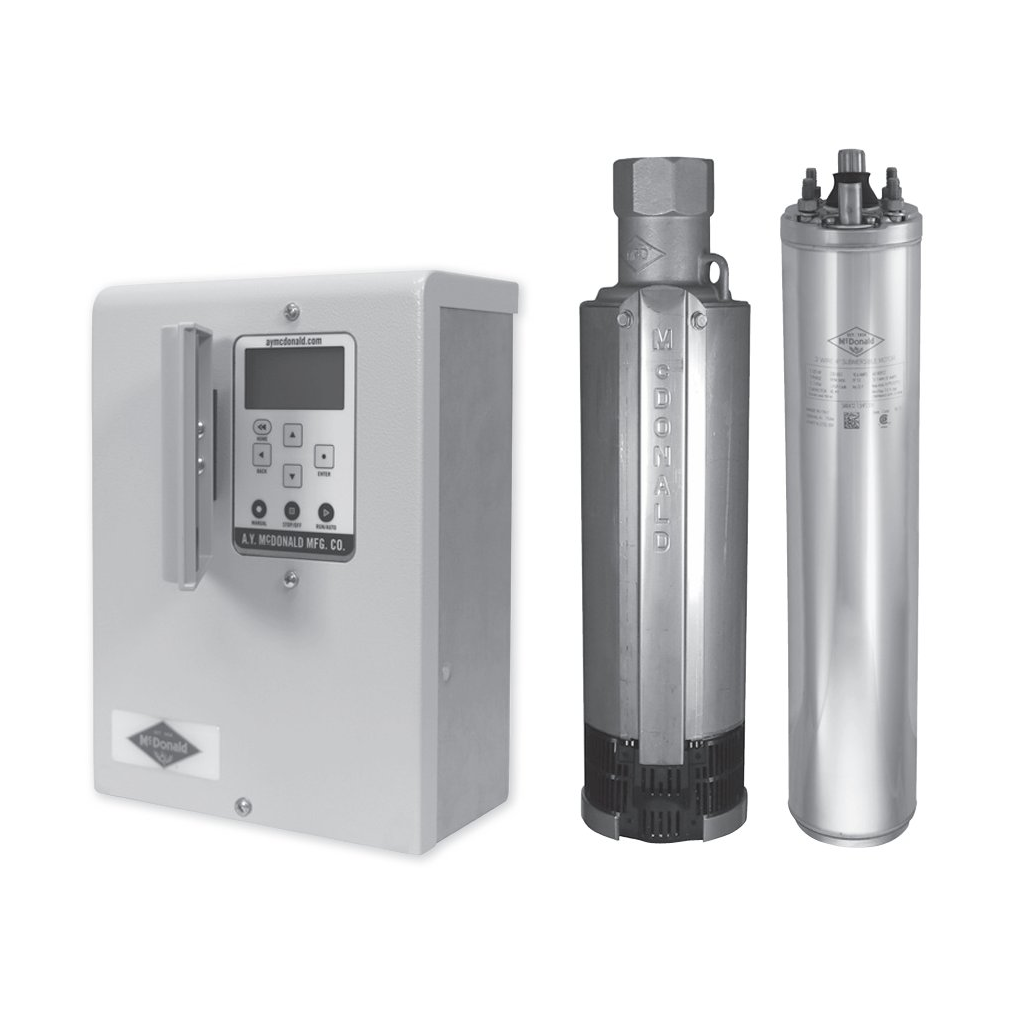
A.Y. McDonald
A.Y. McDonald AutoPAC G - 40 GPM - 24000 Series, 1.5-5 HP
- Price
- From $3,297.51
A.Y. McDonald AutoPAC R - 35 GPM - 24000 Series, 1-5 HP


A.Y. McDonald
A.Y. McDonald AutoPAC R - 35 GPM - 24000 Series, 1-5 HP
- Price
- From $3,023.58
A.Y. McDonald AutoPAC M - 25 GPM - 24000 Series, 1-5 HP


A.Y. McDonald
A.Y. McDonald AutoPAC M - 25 GPM - 24000 Series, 1-5 HP
- Price
- From $2,475.72
A.Y. McDonald AutoPAC P - 20 GPM - 24000 Series, 1/2-5 HP


A.Y. McDonald
A.Y. McDonald AutoPAC P - 20 GPM - 24000 Series, 1/2-5 HP
- Price
- From $2,316.14
A.Y. McDonald AutoPAC L - 15 GPM - 24000 Series, 1/2-5 HP


A.Y. McDonald
A.Y. McDonald AutoPAC L - 15 GPM - 24000 Series, 1/2-5 HP
- Price
- From $2,332.94
A.Y. McDonald AutoPAC K - 10 GPM - 24000 Series, 1/2-5 HP


A.Y. McDonald
A.Y. McDonald AutoPAC K - 10 GPM - 24000 Series, 1/2-5 HP
- Price
- From $2,141.05
A.Y. McDonald AutoPAC V - 7 GPM - 24000 Series, 1/2-2 HP


A.Y. McDonald
A.Y. McDonald AutoPAC V - 7 GPM - 24000 Series, 1/2-2 HP
- Price
- From $2,191.45
A.Y. McDonald AutoPAC J - 5 GPM - 24000 Series, 1/2-1.5 HP


A.Y. McDonald
A.Y. McDonald AutoPAC J - 5 GPM - 24000 Series, 1/2-1.5 HP
- Price
- From $2,331.65
A.Y. McDonald AutoPAC M - 25 GPM - 23000 Series, 1/2-5 HP


A.Y. McDonald
A.Y. McDonald AutoPAC M - 25 GPM - 23000 Series, 1/2-5 HP
- Price
- From $2,385.27
Baker Submersible Pump AutoPAC Package
Description
Authorized Baker Water Systems Dealer · Houston, TX
Baker AutoPAC
Constant Pressure
Pump Packages
City-water pressure from a private well, ordered as one part number. Every AutoPAC pairs a Baker stainless steel submersible pump, its motor, and the American-made AutoDRIVE variable frequency drive at the factory — horsepower balanced end to end, pressure control specified up front, mounting hardware in the carton. No compatibility homework, no matching three components by hand, and one warranty conversation covering the entire system.
17 Packages
23000 & 24000 Series
5–80 GPM
Eleven Flow Classes
1/2–5 HP
2-Wire · 3-Wire · 3-Phase
One SKU
Pump + Motor + Drive, Factory-Matched
The Problem AutoPAC Exists to Solve
Cycling Pressure vs Constant Pressure
A conventional well system has exactly one speed: full on. Pressure climbs to cut-out, the pump stops, the tank drains, pressure sags to cut-in, the pump slams back on — and everyone in the shower feels every step of it. The AutoPAC ends the sawtooth.
What Changes When the Drive Takes Over
1
One Set Pressure, Held Continuously
The AutoDRIVE reads system pressure in real time and varies motor speed to hold your setpoint — one faucet or four zones, the gauge doesn't move.
2
The Sawtooth Disappears
No more cut-in/cut-out band. The 15–20 PSI swing a conventional switch tolerates by design simply stops existing.
3
The Big Tank Shrinks to a Buffer
The pressure tank's job was storing water between cycles. With the drive matching demand continuously, a small captive-air buffer is all the system needs — wellhouse space and tank dollars recovered.
4
Soft Ramps Replace Hard Starts
Starting is the hardest moment in a motor's life. Programmed ramp-up and ramp-down replace across-the-line slams — the quiet longevity benefit under the comfort benefit.
5
Energy Tracks Demand
A pump loping at partial speed for one open faucet draws a fraction of full-speed power. Over irrigation seasons, the meter notices.
Who Feels the Difference First
Homes with irrigation zones fighting the shower. Multi-bathroom households. Horse and hobby farms with wash racks. Anyone who has stood in fading water pressure waiting for the pump to cut back in — which is to say, nearly every private-well owner who hasn't yet run a VFD system.
Package vs Building It Yourself
Everything in an AutoPAC is available piecemeal — pump, motor, and AutoDRIVE each have their own collection. The package exists because the matching is the hard part: drive output current to motor amps, motor HP to pump-end stages, control method to the application. Baker does that math at the factory and stamps one model number on the result. Retrofitting a drive onto healthy existing equipment? Build it — that's what the component collections are for.
One Part Number, Three Major Components
What's in an AutoPAC Carton
Every AutoPAC ships as a complete constant-pressure system: the submersible pump (23000 or 24000 series stainless steel, in your GPM class), the matched Baker motor with leads, and the AutoDRIVE VFD — SD1 for single-phase packages, SD3 for three-phase — with its pressure switch or transducer and mounting hardware included. Baker's own catalog note states the design rule plainly: AutoPAC motor horsepower is balanced with pump end horsepower — a 2 HP motor built against a 2 HP pump end, never a mismatched pair.
What that means at the wellhead: set the pump, mount the drive, connect power and plumbing, and walk the five-step setup on the drive's backlit display. There is no control box to size, no starter to calibrate, and no full-size pressure tank to buy — the drive replaces all three.
Package Contents & Design Rules
Submersible pump23000 or 24000 series stainless ✓
Motor & leadsBaker motor, HP-balanced to the pump end ✓
AutoDRIVE VFDSD1 (single phase) or SD3 (three phase) ✓
Pressure controlSwitch (APS) or transducer (APT), your choice
Mounting hardwareIncluded ✓
Control box / starterNot needed — the drive replaces both
Pressure tankSmall buffer only, purchased separately
Supply power230V 60 Hz single phase — all configurations
Three Motor Configurations × Two Pressure Controls
Choosing Your AutoPAC Configuration
Every package is defined by three choices on the product page: horsepower, motor configuration, and pressure control. The configuration decides which AutoDRIVE is inside; the control decides how tightly pressure is held.
| Motor Configuration | Drive Inside | HP Coverage | Pressure Control Options | Choose It When |
|---|---|---|---|---|
| Two Wire Single Phase | AutoDRIVE SD1 | 1/2–1 1/2 HP | Switch (APS) or Transducer (APT) | Standard residential wells — the simplest downhole wiring |
| Three Wire Single Phase | AutoDRIVE SD1 | 1/2–2 HP | Switch (APS) or Transducer (APT) | A half-horsepower more reach, and the classic 3-wire serviceability |
| Three Wire Three Phase | AutoDRIVE SD3 | 1 1/2–5 HP | Transducer (APT) only | 3–5 HP demand — and it still runs on single-phase house power |
The Three-Phase Package Runs on Single-Phase Power
This surprises everyone: the SD3 drive inside three-phase AutoPACs accepts 230V single-phase input and generates the three-phase output itself. You get three-phase motor efficiency at 3 and 5 HP from an ordinary residential panel — no utility upgrade, no phase converter. It's the only practical path to a 5 HP constant-pressure system on single-phase service.
APS or APT? Transducer, If Pressure Is the Point
The APS pressure switch regulates on mechanical contacts — simple, proven, roughly ±2–3 PSI. The APT transducer feeds the drive a continuous electronic signal — regulation near ±0.5 PSI with no contacts to wear. The price difference is small against the package; if rock-steady pressure is why you're buying an AutoPAC, specify APT. Three-phase packages made the decision for you: transducer only.
Read Any AutoPAC Part Number in Ten Seconds
The Model Number Decoder
Baker's how-to-order example is 23050J2Z-APS. Six fields, left to right — and once you can read one, you can read all seventeen packages.
| Field | Example | Meaning | All Values |
|---|---|---|---|
| Series | 23 | Pump series | 23 = Domestic Stainless Steel · 24 = Stainless Steel |
| Horsepower | 050 | Motor & pump-end HP, factory balanced | 050 · 075 · 100 · 150 · 200 · 300 · 500 (1/2 through 5 HP) |
| GPM Class | J | Rated flow class | J-5 · V-7 · K-10 · L-15 · P-20 · M-25 · R-35 · G-40 · S-55 · Q-60 · T-80 |
| Wires | 2 | Motor wiring | 2 = two wire · 3 = three wire |
| Voltage Code | Z | Electrical configuration | Blank = 230V single phase (standard) · Z = 230V three phase |
| Package Suffix | -APS | AutoPAC pressure control | APS = pressure switch · APT = transducer |
So 23050J2Z-APS reads: 23000-series stainless pump, 1/2 HP, 5 GPM class, two-wire... and 23150K3-APT reads: 23000 series, 1 1/2 HP, 10 GPM, three-wire single phase, transducer-controlled package. The suffix is what separates an AutoPAC from a bare pump model — no suffix, no drive.
Two Stainless Platforms · Eleven Flow Classes
23000 vs 24000 Series AutoPACs
Both platforms are stainless steel — the choice is service orientation and flow reach. The 23000 domestic stainless line covers residential classes with its field-service-friendly construction; the 24000 line carries the same residential classes plus the High Flow set to 80 GPM.
| GPM Class | 23000 Series AutoPAC | 24000 Series AutoPAC |
|---|---|---|
| J — 5 GPM | ✓ 1/2–1 1/2 HP | ✓ 1/2–1 1/2 HP |
| V — 7 GPM | ✓ 1/2–2 HP | ✓ 1/2–2 HP |
| K — 10 GPM | ✓ 1/2–5 HP | ✓ 1/2–5 HP |
| L — 15 GPM | ✓ 1/2–5 HP | ✓ 1/2–5 HP |
| P — 20 GPM | ✓ 1/2–5 HP | ✓ 1/2–5 HP |
| M — 25 GPM | ✓ 1/2–5 HP | ✓ 1–5 HP |
| R — 35 GPM | — | ✓ 1–5 HP High Flow |
| G — 40 GPM | — | ✓ 1 1/2–5 HP High Flow |
| S — 55 GPM | — | ✓ 1 1/2–5 HP High Flow |
| Q — 60 GPM | — | ✓ 1 1/2–5 HP High Flow |
| T — 80 GPM | — | ✓ 3–5 HP High Flow · 2" discharge |
Class Selection Is Well Selection
The GPM class must respect the well's tested yield and the household's peak demand — the same discipline as any submersible selection, VFD or not. A constant-pressure drive cannot manufacture water a well doesn't produce; it can only deliver what's there, steadily. Send the well report and fixture count and the class comes back confirmed against Baker's curves.
The Drive Inside the Package
AutoDRIVE Technical Specifications
Two drives power the AutoPAC line: the SD1 behind every single-phase package, the SD3 behind every three-phase package. Full published specifications, side by side.
| Specification | SD1 (Single-Phase Packages) | SD3 (Three-Phase Packages) |
|---|---|---|
| Horsepower | 1/3–2 HP | 2, 3 & 5 HP |
| Motor Style | 2-wire or 3-wire | 3-wire |
| Input | 115/230 VAC single phase (ranges 90–160V / 180–260V) | 230 VAC single phase (range 190–275V) |
| Output | Single phase, equal to input · 5–120 Hz | Three phase, 230V · 5–300 Hz |
| Rated Current (In / Out max) | 28 A / 16 A | 20–42 A / 11–22 A by model |
| Efficiency | 95% | 95% |
| Overload Capacity | 150% for 2 s | 120% for 60 s |
| Start / Stop Ramps | 0–120 s, or coast to stop | 1–120 s, or coast to stop |
| Short-Circuit Withstand | 5 kA RMS symmetrical | 5 kA RMS symmetrical |
| Control I/O | 2 digital + 2 analog inputs (4–20 mA, 0–5 VDC) | 2 analog inputs (4–20 mA ×2, 0–5 VDC) |
| Enclosure | NEMA 3R outdoor steel, powder coated | NEMA 3R outdoor steel, powder coated |
| Dimensions / Weight | 12.25 × 9.25 × 4.68 in · 13 lbs | 12.25 × 9.25 × 4.68 in · 13 lbs |
| Operating Temperature | -4°F to 122°F | -4°F to 122°F (104°F for the 5 HP model) |
| Altitude | Derate 5°C per 2,000 ft above 5,500 ft | Derate 5°C per 2,000 ft above 5,500 ft |
From Carton to Constant Pressure
Installation & Ownership
The Install, In Sequence
1
Set the Pump Like Any Submersible
Drop pipe, splice, safety rope, torque arrestor — the downhole work is identical to a conventional system. Set below maximum drawdown, above the sediment.
2
Mount the Drive at the Wellhead or Wellhouse
NEMA 3R means outdoor-rated: rain, snow, -4°F to 122°F, with insect guards and pre-cut bottom conduit openings. Mounting hardware ships in the carton.
3
Wire Supply In, Motor Out
230V single-phase supply to the drive, motor leads out — including on three-phase packages, where the SD3 makes its own three-phase. Line-voltage work belongs with a licensed electrician per local code.
4
Plumb the Small Buffer Tank & Sensor
The transducer or switch tees into the discharge line; the buffer tank replaces the full-size tank a conventional system would demand.
5
Five-Step Setup on the Display
The large backlit graphic display — readable in direct sunlight — walks constant-pressure configuration in five steps or less. No laptop, no software, no programming dongle.
Field-Repairable, By Part Number
The pressure sensing components stock as individual replacement parts — the SDREPT transducer with 10 ft lead and the SDREPPSW pressure switch with wire — alongside the drive's boards, keypad, and fan kit. A qualified electrician swaps the failed part; the system doesn't become a paperweight because one sensor aged out.
Protection Is Built In
The drive carries its own dry-run, overload, and over/under-voltage protection — the jobs a Pumptec device performs on conventional systems are native here, which is why AutoPACs don't pair with add-on protection modules.
⚠ Wire Sizing Still Rules
Variable speed doesn't repeal Ohm's law: the cable from drive to motor must be sized to the manufacturer's chart for the HP and run length. Undervoltage at the motor from undersized wire remains an installation defect, not a warranty claim — same as every submersible ever set.
Technical FAQ
Common Questions
Do I need three-phase power for a three-phase AutoPAC?
No — and this is the line's best-kept secret. The SD3 drive inside every three-phase package accepts 230V single-phase input and generates the three-phase output internally. A 3 or 5 HP three-phase constant-pressure system runs from an ordinary residential panel, no utility upgrade and no rotary phase converter. The "three phase" in the name describes the motor, not your electrical service.
APS or APT — which pressure control should I order?
APT (transducer) unless budget absolutely forbids it. The switch (APS) regulates on mechanical contacts at roughly ±2–3 PSI; the transducer feeds the drive a continuous signal and holds near ±0.5 PSI with nothing to wear. Constant pressure is the entire reason this product exists — specify the control that fully delivers it. Three-phase packages ship transducer-only, so the question applies to single-phase configurations.
Does an AutoPAC need a control box, starter, or pressure switch?
None of the three. The AutoDRIVE performs the starting, the speed control, the pressure sensing, and the motor protection in one enclosure — the conventional control box, starter kit, and cycling pressure switch have no role in this system. The only conventional component that survives is the tank, and it shrinks to a small buffer.
What tank do I actually need?
A small captive-air buffer tank — enough to smooth the drive's response and absorb minor thermal expansion, not the multi-gallon drawdown storage a cycling system requires. That's a genuine cost and wellhouse-space recovery versus conventional systems, where tank capacity is what protects the motor from short-cycling. Ask when you quote and we'll size the buffer to your package.
23000 or 24000 series — does it matter for an AutoPAC?
Both are stainless steel platforms; for the shared residential classes (5–25 GPM) either serves well, with the 23000 bringing its service-oriented construction and the 24000 its breadth. The decision makes itself above 25 GPM: the High Flow classes — 35 through 80 GPM for irrigation and higher-demand properties — exist only on the 24000 side.
I already have a good pump and motor. Should I still buy an AutoPAC?
Probably not — buy the drive alone. The AutoDRIVE is available standalone in our Starter Kit & AutoDRIVE collection, and retrofitting it onto verified-healthy equipment is exactly what the component path is for. The AutoPAC's value is factory matching for new installations and full replacements; paying for a new pump and motor you don't need inverts the economics.
What happens to water delivery if the drive ever fails?
The drive is the single point of control, so the pump stops — same as a failed control box or starter on a conventional system. The mitigation is that AutoDRIVEs are field-repairable by design: transducer, pressure switch, boards, keypad, and fan kit all stock as individual parts, so recovery is a component swap by a qualified electrician rather than a whole-drive replacement and its lead time.
Can an AutoPAC go in an existing well, or only new construction?
Any 4" well that fits the pump — replacement installs are the most common case. The downhole work is standard submersible practice, the drive mounts where the old control box lived (or at the wellhead, given its NEMA 3R outdoor rating), and the oversized pressure tank comes out of service. Well data still governs the selection: send yield, static level, and depth, and we confirm the class and HP before the package ships.
One Part Number to Constant Pressure
Send well yield, static level, fixture count, and whether irrigation is in the picture — the confirmed AutoPAC model comes back same day, checked against Baker's curves, with the APS/APT recommendation included.
sales@watermainsupply.com
281.664.8000Free System Sizing & Technical Support
sales@watermainsupply.comSame-Day Quote Response
Authorized DealerBaker Water Systems · AutoPAC Constant Pressure
- Choosing a selection results in a full page refresh.